Digital Marketing
Digital Marketing A to Z: The Complete 2026 Guide
Every core digital marketing channel and term, explained in plain language — whether you're learning the field from scratch or trying to decide which service your business actually needs first.
15 min read · Published 2026-08-06 · Written by Jasbir Mehra, Founder & Director

Quick answer
Digital marketing is the umbrella term for every way a business gets found, gets chosen, and gets remembered online — organic search (SEO), paid ads (Google Ads, Meta Ads), content and social media, email and WhatsApp, digital PR and link building, and conversion optimisation on the website itself. There's no single "best" channel; the right starting point depends on how quickly you need results, your budget, and what you're actually selling. The glossary and decision framework below walk through each one.
What "Digital Marketing" Actually Covers
"Digital marketing" gets used as a catch-all for a lot of genuinely different activities — running a Google Ads campaign has almost nothing in common day-to-day with writing a blog post, and neither has much in common with fixing a slow-loading website. What ties them together is the goal: getting a business found by the right people online, and turning that attention into enquiries, sales, or brand awareness that pays off later.
Every channel below tends to fall into one of four broader jobs, whether or not the term itself sounds technical: earning visibility organically (SEO, content, link building), buying visibility directly (paid ads), converting the traffic you already have into actual enquiries (CRO, UX), and building the foundation everything else points back to (your website and brand). If you've read our piece on why digital marketing matters for a business, this glossary is the practical follow-up — the actual vocabulary you'll run into once you start.

The Digital Marketing Glossary, A to Z
Each entry below is deliberately short — a working definition, not an essay — so this page can double as a reference you come back to. Where a term maps to a specific MindBrightly service, it's linked, but every definition here is accurate as a general term, independent of any one agency.
- A — Paid Ads. Campaigns where you pay for placement rather than earning it organically — most commonly Google Ads (search, display, YouTube) and Meta's Facebook & Instagram Ads. The advantage is speed: a paid campaign can start driving traffic the same day it launches.
- B — Branding. The consistent visual identity and voice — logo, colour palette, typography, tone of writing — that makes a business recognisable across every channel it uses. Good branding isn't just a logo; see our piece on what branding really means beyond your logo for the full picture.
- C — Content Marketing & Copywriting. Content marketing is publishing genuinely useful material (guides, comparisons, FAQs) that answers real customer questions. Copywriting is the narrower skill of writing text specifically meant to persuade — a headline, an ad, a landing page.
- D — Digital PR & Link Building. Earning mentions and backlinks from other credible websites, which builds both referral traffic and the kind of authority signal that helps search rankings. See link building and our explainer on whether link building still matters.
- E — Email & WhatsApp Marketing. Owned communication channels — meaning you're not renting attention from a platform's algorithm — used to nurture leads over time and bring past customers back. See WhatsApp & email marketing.
- F — Facebook Ads. Paid campaigns run through Meta's ad platform and shown on Facebook specifically (Instagram Ads run through the same system — see "I" below). Strong for visual products and broad audience targeting. Full detail on Facebook Ads.
- G — Google Ads & Google Business Profile. Google Ads is Google's paid platform for search, display and video placements. Google Business Profile is the free listing that shows a business in Google Maps and local search — foundational for anyone relying on local SEO.
- H — HARO-style Link Building. Earning backlinks and press mentions by responding to journalists actively looking for expert sources to quote — a genuine, non-paid way to build authority. See HARO link building.
- I — Instagram Ads. Paid campaigns on Instagram, run through the same Meta platform as Facebook Ads but usually leaning more visual and Reels-first. Detail on Instagram Ads.
- J — Journey Mapping. Plotting the real path a customer actually takes — from first hearing about a business, to researching it, to finally buying — so marketing effort matches where people genuinely are in that process instead of guessing.
- K — Keyword Research. Finding the exact words and phrases real customers type into Google before deciding what content, pages or ads to target — the foundation almost every SEO effort starts from.
- L — Link Building, Local SEO & LinkedIn Ads. Three distinct "L" channels: earning backlinks (link building), ranking for city-specific searches (local SEO), and running B2B-focused paid campaigns on LinkedIn.
- M — Media Production. Photography, video and testimonial content produced specifically for marketing use, rather than casual phone photos — covers video production, product photography and drone video.
- N — Niche Targeting. Narrowing an audience to a specific, well-defined group — by industry, location or behaviour — rather than marketing broadly to "everyone," which usually produces cheaper, more relevant leads.
- O — Organic Search & Outbound Marketing. "Organic" means unpaid visibility earned through SEO. Outbound marketing is the opposite direction — proactively reaching out to prospects (cold email, direct outreach) rather than waiting to be found.
- P — PPC, Programmatic & Product Photography. PPC (pay-per-click) is the pricing model behind most search ads. Programmatic advertising automates ad buying across many websites at once. Product photography is imagery built specifically for online selling.
- Q — Quality Score. Google Ads' internal rating of how relevant your ad, keyword and landing page are to each other — a higher score typically means a lower cost per click for the same ad position.
- R — ROI & Retargeting. Return on investment is the only measure of marketing success that actually matters long-term — spend versus what it generated. Retargeting (or remarketing) is showing ads again specifically to people who already visited your site but didn't convert.
- S — SEO & Social Media Marketing. SEO is optimising a website to rank organically on search engines. Social media marketing is the organic side of social — content, community management, brand voice — as distinct from paid social ads.
- T — Technical SEO, Translation & X (Twitter) Ads. Technical SEO is the crawlability/speed/structure foundation search engines need. Translation services adapt content for multilingual audiences. X (Twitter) Ads are paid campaigns on X.
- U — UX & User Behaviour Analytics. How real visitors actually experience a website — where they click, where they hesitate, where they leave — studied through tools like UX testing and behaviour analytics to find and fix friction.
- V — Video Production. Brand films, product videos, and testimonial videos produced specifically for marketing, distinct from general video production for other uses.
- W — Website Design & Development. The foundation every other channel At its core, sends traffic back to — see website design & development, including custom builds and WordPress specifically.
- X — X (Twitter) Ads. Covered above under "T" — paid campaigns on X, generally strongest for real-time, conversation-driven brands and announcements.
- Y — YouTube Ads. Video ad campaigns shown before, during or alongside YouTube content, run through Google Ads. Detail on YouTube Ads management.
- Z — Zero-Click Search & AI Overviews. A growing share of searches are now answered directly on the results page — by a featured snippet, or increasingly by an AI-generated summary — without the user ever clicking a website. Structuring content so these systems can accurately read and cite it is what AI SEO is about.
So Which One Should You Actually Start With?
The honest answer depends on intent — yours, and your customers'. If you're reading this because you want to learn digital marketing as a skill or career, the practical starting point is usually one channel at a time, deep enough to actually run a real campaign rather than just knowing the vocabulary — our guide on how to become a digital marketer in India walks through that path, and our courses are built around exactly that hands-on approach.
If you're reading this because your business needs more customers, the decision usually comes down to timeline and budget rather than which channel is objectively "best": paid ads (Google Ads or Meta Ads) if you need enquiries within days, SEO and content if you're building for the next 6-12 months and want traffic that doesn't stop the moment you pause spending, and a proper look at your website's conversion path (CRO) if you're already getting traffic but not enough of it turns into actual enquiries. Our comparison of SEO vs Google Ads — which to start with first goes deeper on that specific trade-off, and a digital marketing strategy conversation is where all of this gets tied into one plan instead of picked ad hoc.
How AI Search Is Changing Digital Marketing in 2026
The single biggest shift in how people search hasn't been a new channel — it's been a new layer sitting on top of existing ones. Google's AI Overviews, and AI assistants like ChatGPT, Gemini and Perplexity, increasingly answer a question directly instead of just listing links to click. For a business, that means visibility now has two distinct forms: showing up in a traditional search result someone clicks, and being the source an AI system reads, trusts, and cites when it answers someone's question — even if that person never visits the website directly.
This doesn't replace SEO fundamentals — clear structure, real expertise, fast pages and honest content still matter. What it adds is a new set of habits: writing direct, quotable answers near the top of a page instead of burying them under three paragraphs of preamble, using genuine FAQs and comparison tables an AI can lift cleanly, and making sure structured data (schema markup) explicitly tells these systems what a page actually is. It's also why local, specific detail — a real address, a named team member, a genuine service area — tends to hold up better than generic claims, since AI systems weigh credibility signals much the way a careful human reader would.
If your own website hasn't been looked at through this lens yet, that's specifically what AI SEO services and a proper SEO audit are for — finding the gap between how your content reads to a human and how well-equipped it is to be found, read and cited by an AI system, without changing what your business is actually saying.
Where to Go Next
This guide is deliberately broad — a map of the field, not a deep dive into any one channel. For a closer look at specific pieces, our guides on local SEO for the tricity, technical SEO, Core Web Vitals and page speed, and what digital marketing actually costs in India each go deeper into one area covered briefly above. If you're evaluating an agency rather than doing this yourself, how to choose a digital marketing agency in India is worth reading before you commit to anyone.
And if you'd rather skip the research and just talk through what your specific business actually needs, that's what a free consultation is for — no assumption made about which channel is right until someone's actually looked at your situation.
FAQ
Common questions
What are the main types of digital marketing?
Is digital marketing hard to learn from scratch?
Should a small business start with SEO or paid ads?
What is AI search optimisation and do I need to worry about it in 2026?
How much does digital marketing cost for a small business in India?
Can one person realistically run all of these channels alone?
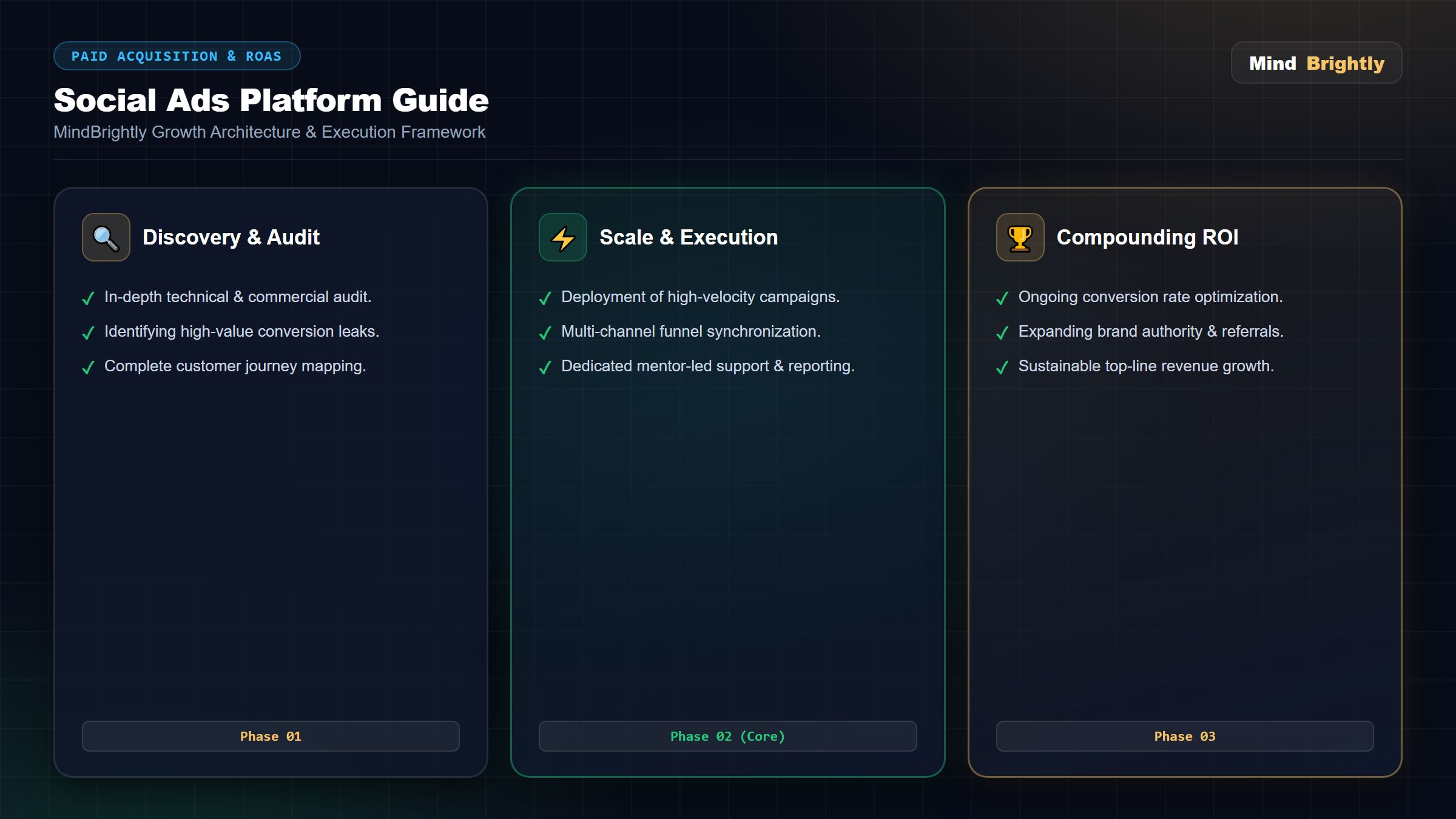
The Ultimate 2026 Framework for Dominating Digital Marketing
While the fundamentals of digital marketing a to z 2026 guide remain crucial, the landscape has shifted violently due to Generative AI, privacy protocols (iOS 14.5+), and changing consumer psychology. In this exclusive deep-dive, we break down the exact technical frameworks MindBrightly uses to generate 10x ROI for our enterprise and local clients.
1. The Shift to Generative Engine Optimization (GEO)
Traditional Search Engine Optimization (SEO) was built on "Ten Blue Links." In 2026, over 65% of informational queries end in a "Zero-Click Search." Users ask a question, and Google AI Overviews, ChatGPT Search, or Perplexity AI instantly provide the answer without the user ever clicking your website.
To adapt your Digital Marketing strategy, you must transition to Generative Engine Optimization (GEO). AI models do not read websites like humans; they parse knowledge graphs and assess entity relationships.
- Entity Salience: Your brand must be recognized as a distinct entity in Google's Knowledge Graph, not just a keyword string.
- Information Gain: AI models penalize derivative content. Your articles must include proprietary data, original research, or unique expert quotes that exist nowhere else on the internet.
- Citation Formatting: Structuring your data in clean, semantic HTML tables and bullet points increases the likelihood of an AI tool citing you as the primary source in a summarized answer.
2. Defeating Signal Loss with Meta Conversions API (CAPI)
If your Digital Marketing campaigns rely solely on browser-based tracking (like the standard Meta Pixel or Google Analytics 4 client-side tags), you are bleeding budget. Browsers like Safari (ITP) and Firefox aggressively block third-party cookies, and iOS 14.5+ users overwhelmingly opt out of tracking.
The Solution: Server-Side Tracking. By implementing Google Tag Manager Server-Side (sGTM), the data flow changes entirely. Instead of the user's browser sending a signal to Facebook (which gets blocked), your web server directly sends a secure, hashed API payload to Meta's servers.
This recovers up to 40% of "lost" conversion data. When Meta's Advantage+ algorithms receive 40% more conversion signals, they exit the learning phase faster, drastically reducing your Cost Per Acquisition (CPA).
3. The B2B Playbook: Account-Based Marketing (ABM)
Applying B2C tactics to a B2B Digital Marketing strategy is the number one reason agencies fail. B2B sales cycles take 3 to 12 months, involve multiple stakeholders (CFO, CTO, Procurement), and have high ticket values. You cannot sell a $50,000 SaaS contract using a generic Facebook image ad.
MindBrightly utilizes Account-Based Marketing (ABM). We do not target "demographics"; we target specific companies.
- IP Identification: We identify the corporate IP addresses of your top 100 target accounts (e.g., Infosys HQ in Bangalore).
- Role-Based Targeting: We run LinkedIn Thought Leadership Ads exclusively to employees holding "Director" or "C-Level" titles within those specific IPs.
- High-Intent Lead Magnets: The ad creative is never "Buy our software." It is an interactive ROI Calculator or an in-depth Industry Whitepaper that requires a work email to access.
4. WhatsApp Automation & Zero-Friction Lead Nurturing
In the Indian market, email marketing is practically dead for B2C and struggling in B2B. With average open rates plummeting below 15%, relying on email autoresponders for your Digital Marketing campaigns will result in massive lead drop-off.
Enter the WhatsApp Cloud API. With a 98% open rate, WhatsApp is the ultimate conversion engine. When a prospect submits a lead form on your website or Meta Ad, our automated systems instantly (within 3 seconds) send them a personalized WhatsApp message.
- Instant Gratification: The message contains exactly what they requested (a PDF brochure, a pricing link, or a portfolio).
- Interactive Buttons: We use WhatsApp interactive UI (Quick Reply Buttons) to ask qualifying questions like "What is your budget?" or "Schedule a Call."
- AI Chatbot Handoff: If the user asks a complex question, our integrated AI chatbot answers them instantly based on your company's knowledge base, only handing over to a human agent when the prospect is ready to close.
5. Conversion Rate Optimization (CRO) & Core Web Vitals
Driving 10,000 visitors to a slow, unoptimized landing page is a waste of capital. Your Digital Marketing strategy is only as strong as your Conversion Rate.
Google's Core Web Vitals (CWV) algorithm update mandates that sites pass stringent speed tests. Specifically, your Largest Contentful Paint (LCP) must occur under 2.5 seconds, and your Interaction to Next Paint (INP) must be under 200 milliseconds.
To achieve this, we abandon bloated WordPress templates. We engineer custom architectures using tools like Vite and static-site generation. A site that loads in 0.8 seconds not only ranks higher organically but enjoys a significantly lower Cost Per Click (CPC) on Google Ads due to higher Quality Scores.
Take Your Digital Marketing to the Enterprise Level
Stop losing market share to competitors with inferior products but superior data pipelines.
Explore MindBrightly's Core Services & Industry Solutions
Core Growth Services
Industry Specific Marketing
Flawless Execution
Our Digital Marketing A to Z: The Complete 2026 Guide Blueprint
We don't do guesswork. Every campaign follows a rigorous, data-driven framework designed to maximize ROI and eliminate wasted spend.
Deep Audit & Strategy
We analyze your current setup, spy on your top competitors, and identify exact conversion bottlenecks before spending a single rupee.
Technical Implementation
From Server-Side Tracking to robust Schema markup, we lay a flawless technical foundation so algorithms feed on perfect data.
Aggressive Scaling
Once we hit your target Cost Per Acquisition (CPA), we aggressively scale the budget using AI-bidding to dominate your market share.
FAQs About Digital Marketing A to Z: The Complete 2026 Guide
Common questions we get from founders and marketing heads.