AFFILIATE MARKETING
How Affiliate Marketing Actually Works, Step by Step
Referral links, commissions, and disclosure rules explained simply—so you can start earning honestly instead of guessing.
9 min read · Published 2026-07-31 · Written by Jasbir Mehra, Founder & Director

What affiliate marketing actually is
Affiliate marketing is a simple deal at its core: a business gives you a unique tracking link, you share that link with people who might genuinely want the product or service, and if someone buys through your link, you earn a commission. No inventory, no customer support headaches, no need to build your own product. You're essentially getting paid for making a useful introduction.
It sounds simple because it is simple in structure — but the way people actually succeed at it (or fail at it) is less obvious. Most beginners picture affiliate marketing as "post a link everywhere and money appears." That's not how it works, and understanding why is the first step to doing it properly.
The businesses that run affiliate programs — software companies, course creators, agencies, product brands — do it because it's a low-risk way to grow. They only pay when a sale actually happens, so there's no upfront marketing spend wasted on people who never buy. That's also exactly why the businesses that stick around and pay affiliates reliably tend to have very clear rules: what counts as a valid referral, when commission gets paid, and what affiliates are and aren't allowed to do to earn it.
How referral links and tracking actually work
When you join an affiliate program, you're given a unique link — usually your own URL with a special code attached, like mindbrightly.com/?ref=yourname. When someone clicks that link, a small tracking file called a cookie gets stored in their browser, which tells the business "this visitor came from this specific affiliate." If that visitor buys something within the program's tracking window (this could be same-day, or it could be 30 days, depending on the program), the sale gets credited to you.
A few practical things matter here that new affiliates often don't realize:
- The click has to actually happen through your link. If someone sees your recommendation but later just searches for the brand name directly and buys, most programs won't credit you unless they have more advanced attribution in place.
- Cookies can be cleared or blocked. Privacy-focused browsers and ad blockers sometimes interfere with tracking, which is one honest reason your numbers might not always match what you expect.
- Self-referrals are usually blocked. You generally can't buy the product yourself through your own link to earn a commission on your own purchase — legitimate programs actively check for this.
- Attribution windows vary. A longer window (say 30 days) means you still get credit even if someone takes a few weeks to decide. A shorter window is stricter but usually simpler to track.
Understanding this mechanism matters because it explains why "just drop the link and forget about it" rarely works. If your link isn't the one someone actually clicks and returns through, you don't get paid — even if you were the reason they found out about the product in the first place.

How commission structures typically work
Not all affiliate programs pay the same way, and the structure changes how you should think about your strategy.
The most common models are:
- Flat percentage commission — you earn a fixed percentage of whatever the referred customer spends. This is the simplest to understand and predict. If a program offers a flat 10% commission with no tiers, for example, you know exactly what a ₹15,000 sale is worth to you without needing to hit some hidden target first.
- Tiered commission — your percentage increases as you refer more sales or hit certain volume milestones. This rewards high-volume affiliates but can be confusing for beginners trying to figure out what they'll actually earn on their first few referrals.
- Flat fixed amount per sale or per lead — instead of a percentage, you get a set rupee (or dollar) amount regardless of the exact purchase size. This is common for lead-generation offers (like sign-ups or free trials) rather than direct purchases.
- Recurring commission — for subscription-based products, some programs pay you a commission every renewal cycle, not just once. This is rarer but valuable if you can find it, since it rewards you for referring customers who stick around.
None of these structures is automatically "better" — a flat, transparent percentage with no tiers and no minimum purchase requirement is often easier for a genuine beginner to understand and trust, precisely because there's no fine print about unlocking a "real" rate later. Whatever the structure, the two questions worth asking before joining any program are: what exactly do I earn per sale, and when and how does the money actually get paid out?
Disclosure isn't optional — and it protects you too
If you're sharing a link that earns you money when someone buys through it, you're legally and ethically expected to say so. In most countries, including India, consumer protection guidelines increasingly expect clear disclosure of paid or incentivized recommendations, and platforms like YouTube, Instagram, and Google itself have their own disclosure requirements for sponsored or affiliate content.
This isn't just a box-ticking exercise. Disclosure actually helps you, for a few real reasons:
- It builds trust instead of eroding it. People are far more forgiving of an affiliate link when you're upfront about it than when they discover it later and feel misled.
- It sets honest expectations. A simple line like "I earn a small commission if you sign up through this link, at no extra cost to you" tells people exactly what's happening without pretending your recommendation is purely neutral.
- It keeps you compliant. Undisclosed affiliate content can get flagged or removed by platforms, and in some cases creates real legal exposure for both you and the business you're promoting.
A good disclosure doesn't need to be dramatic. Something as simple as adding "(affiliate link)" next to the link, or a one-line note at the top of a video description or blog post, is usually enough. What matters is that it's clear, visible before someone clicks, and not buried in fine print nobody reads.
Genuine recommendations vs. spam — the difference that actually matters
This is where most new affiliates either build something sustainable or burn out within a month. There's a real difference between sharing something you'd recommend anyway and blasting a link at everyone you know hoping something sticks.
Spammy affiliate behavior usually looks like: posting the same link repeatedly across unrelated Facebook groups, WhatsApp broadcast lists, or comment sections; recommending something you've never actually looked into just because the commission looks good; or pressuring friends and family to "just sign up, please, it helps me." This approach doesn't just feel uncomfortable to do — it also converts poorly, because people can tell when a recommendation isn't genuine, and platforms increasingly penalize repetitive, low-effort link-dropping.
What actually works is closer to being a genuinely useful source of information. That could mean:
- Writing an honest comparison or walkthrough of something you've actually used or looked into carefully.
- Answering a real question someone asked (in a forum, group, or DM) and mentioning the link only because it's a relevant, honest answer — not because you inserted it.
- Creating content — a short video, a blog post, a social caption — that would still be useful even if there were no affiliate link attached at all.
- Being selective. Promoting one or two things you actually understand and believe in will almost always outperform promoting ten things you don't.
If you're exploring this because you're curious about digital marketing more broadly, not just affiliate income specifically, it's worth reading how to become a digital marketer in India as a related next step — a lot of the same skills (writing clearly, understanding an audience, being consistent) apply directly to affiliate marketing too.
Common mistakes new affiliates make
Most of the mistakes that stall a new affiliate's progress are avoidable once you know to look out for them.
- Not reading the program terms. Every program has rules about what counts as a valid sale, how long tracking cookies last, when payouts happen, and what promotional methods are or aren't allowed. Skipping this leads to confusion and disappointment later.
- Promoting things you haven't actually tried or researched. This is the fastest way to lose an audience's trust, and it usually shows in weak, generic content that doesn't convert anyway.
- Expecting instant results. Affiliate income is not a lottery ticket. It builds on an audience, some content, and repeated exposure over time — not a single post.
- Ignoring disclosure. Beyond the compliance risk, hiding the fact that a link is an affiliate link tends to backfire once people notice.
- Spreading effort too thin. Joining five different programs and posting about all of them occasionally is usually far less effective than focusing on one or two you actually understand and can speak about credibly.
- Not tracking what's working. Most programs give you a dashboard showing clicks and conversions. Ignoring that data means you keep repeating whatever isn't working instead of adjusting.
- Giving up right when momentum was about to build. Because affiliate income is cumulative — content keeps getting found, links keep getting shared — quitting after two weeks of silence is often the point right before things would have started moving.
Realistic expectations — how long does it actually take?
It's worth being honest about this, because a lot of affiliate marketing content online oversells the speed. There is no fixed timeline that applies to everyone, because it depends heavily on factors like whether you already have an audience (friends, followers, a WhatsApp community, a small blog or YouTube channel), how relevant the product is to that audience, and how consistently you share genuine, useful content rather than one-off posts.
What's generally true, regardless of the specific program, is this: the first commission usually takes longer than people expect, because it requires someone to actually click your link, trust the recommendation enough to consider it, and then complete a purchase — three separate steps that don't all happen quickly. Early on, it's normal to see clicks with no conversions for a while as you figure out what kind of content and audience actually resonates. Meaningful, repeatable income (as opposed to an occasional one-off commission) tends to come from consistency — regularly creating helpful content, understanding what your specific audience responds to, and refining your approach based on what the data in your affiliate dashboard actually shows you.
If you're treating it as a side activity you do consistently over months, not a quick win you expect in days, your expectations will be a lot more aligned with how affiliate marketing genuinely tends to play out.
How to actually get started with a free affiliate program
If you want to try this out without financial risk, look for a program that's genuinely free to join — no signup fee, no minimum purchase required before you can start earning, and a commission structure that's stated clearly upfront rather than buried in a support article. MindBrightly's free affiliate program works this way: joining costs nothing, there's no minimum purchase requirement, and the commission structure is disclosed transparently so you know exactly what you're working with before you start sharing anything.
A practical way to begin, once you've joined a program like this:
- Understand what you're recommending first. Look at the actual services or products, not just the commission rate, so you can speak about them credibly.
- Start with people or platforms where you already have some trust. This could be a small community, a few close contacts who'd genuinely benefit, or a blog/social account you already post on.
- Disclose clearly, every time. Make it a habit from your very first share, not something you add later.
- Track what happens. Use your dashboard to see which type of content or which platform is actually generating clicks and conversions, and do more of what's working.
- Be patient and consistent. Treat it as a long-term addition to your income, not a one-time push.
If you have questions before joining — about how the commission works, how payouts are handled, or anything else — it's worth reaching out through the contact page rather than guessing or assuming.
FAQ
Common questions
Is affiliate marketing actually free to start?
Do I need a large following or website to become an affiliate?
How and when do affiliate commissions actually get paid?
What happens if someone clicks my link but doesn't buy right away?
Do I have to disclose affiliate links even to friends and family?
Can I promote an affiliate link on any platform I want?
What's the single biggest mistake beginners make?
How long before I earn my first commission?
Is a flat commission rate better than a tiered one for beginners?
What should I check before joining any affiliate program?
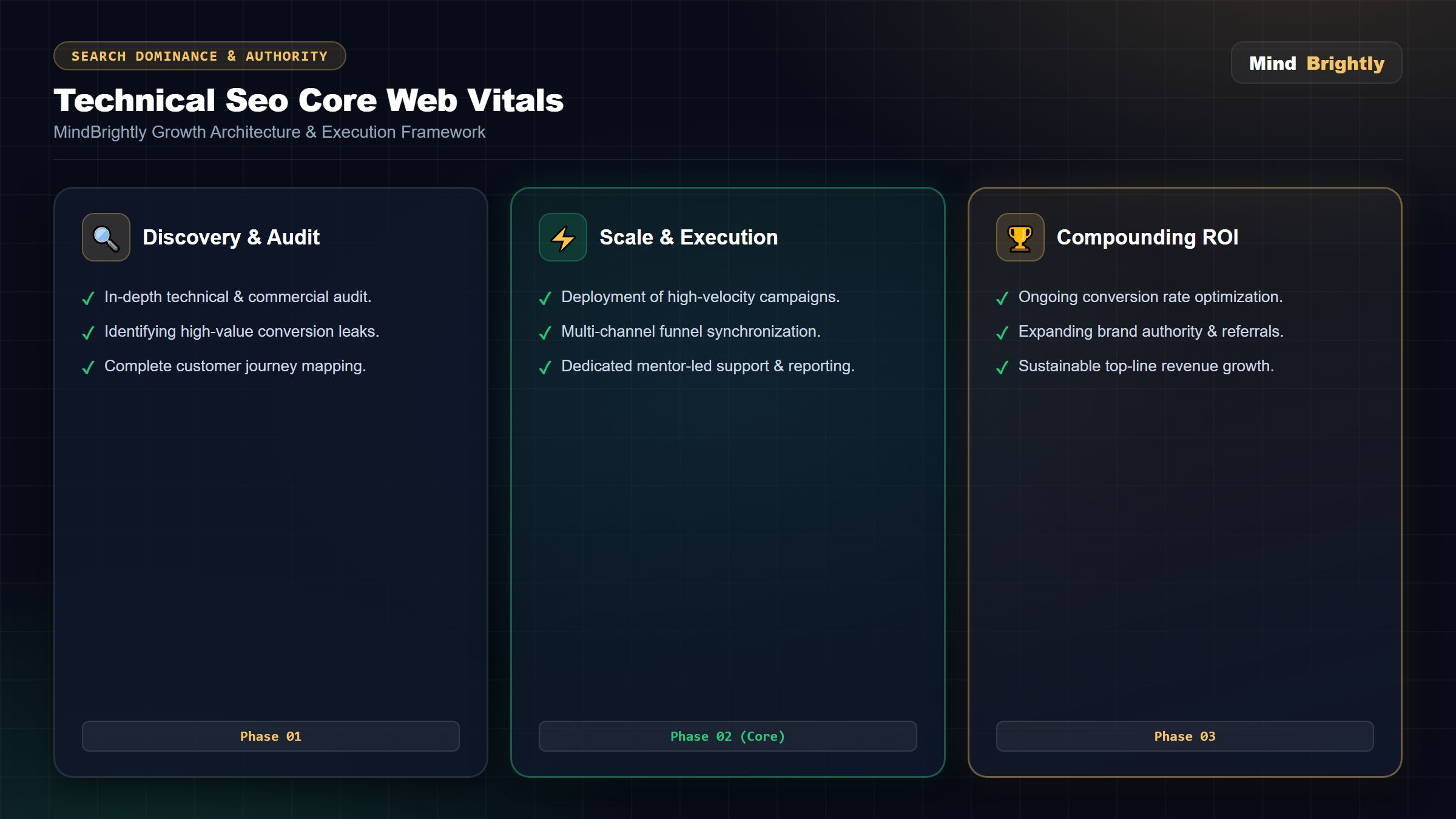
The Ultimate 2026 Framework for Dominating Digital Marketing
While the fundamentals of how to start earning with a free affiliate program remain crucial, the landscape has shifted violently due to Generative AI, privacy protocols (iOS 14.5+), and changing consumer psychology. In this exclusive deep-dive, we break down the exact technical frameworks MindBrightly uses to generate 10x ROI for our enterprise and local clients.
1. The Shift to Generative Engine Optimization (GEO)
Traditional Search Engine Optimization (SEO) was built on "Ten Blue Links." In 2026, over 65% of informational queries end in a "Zero-Click Search." Users ask a question, and Google AI Overviews, ChatGPT Search, or Perplexity AI instantly provide the answer without the user ever clicking your website.
To adapt your Digital Marketing strategy, you must transition to Generative Engine Optimization (GEO). AI models do not read websites like humans; they parse knowledge graphs and assess entity relationships.
- Entity Salience: Your brand must be recognized as a distinct entity in Google's Knowledge Graph, not just a keyword string.
- Information Gain: AI models penalize derivative content. Your articles must include proprietary data, original research, or unique expert quotes that exist nowhere else on the internet.
- Citation Formatting: Structuring your data in clean, semantic HTML tables and bullet points increases the likelihood of an AI tool citing you as the primary source in a summarized answer.
2. Defeating Signal Loss with Meta Conversions API (CAPI)
If your Digital Marketing campaigns rely solely on browser-based tracking (like the standard Meta Pixel or Google Analytics 4 client-side tags), you are bleeding budget. Browsers like Safari (ITP) and Firefox aggressively block third-party cookies, and iOS 14.5+ users overwhelmingly opt out of tracking.
The Solution: Server-Side Tracking. By implementing Google Tag Manager Server-Side (sGTM), the data flow changes entirely. Instead of the user's browser sending a signal to Facebook (which gets blocked), your web server directly sends a secure, hashed API payload to Meta's servers.
This recovers up to 40% of "lost" conversion data. When Meta's Advantage+ algorithms receive 40% more conversion signals, they exit the learning phase faster, drastically reducing your Cost Per Acquisition (CPA).
3. The B2B Playbook: Account-Based Marketing (ABM)
Applying B2C tactics to a B2B Digital Marketing strategy is the number one reason agencies fail. B2B sales cycles take 3 to 12 months, involve multiple stakeholders (CFO, CTO, Procurement), and have high ticket values. You cannot sell a $50,000 SaaS contract using a generic Facebook image ad.
MindBrightly utilizes Account-Based Marketing (ABM). We do not target "demographics"; we target specific companies.
- IP Identification: We identify the corporate IP addresses of your top 100 target accounts (e.g., Infosys HQ in Bangalore).
- Role-Based Targeting: We run LinkedIn Thought Leadership Ads exclusively to employees holding "Director" or "C-Level" titles within those specific IPs.
- High-Intent Lead Magnets: The ad creative is never "Buy our software." It is an interactive ROI Calculator or an in-depth Industry Whitepaper that requires a work email to access.
4. WhatsApp Automation & Zero-Friction Lead Nurturing
In the Indian market, email marketing is practically dead for B2C and struggling in B2B. With average open rates plummeting below 15%, relying on email autoresponders for your Digital Marketing campaigns will result in massive lead drop-off.
Enter the WhatsApp Cloud API. With a 98% open rate, WhatsApp is the ultimate conversion engine. When a prospect submits a lead form on your website or Meta Ad, our automated systems instantly (within 3 seconds) send them a personalized WhatsApp message.
- Instant Gratification: The message contains exactly what they requested (a PDF brochure, a pricing link, or a portfolio).
- Interactive Buttons: We use WhatsApp interactive UI (Quick Reply Buttons) to ask qualifying questions like "What is your budget?" or "Schedule a Call."
- AI Chatbot Handoff: If the user asks a complex question, our integrated AI chatbot answers them instantly based on your company's knowledge base, only handing over to a human agent when the prospect is ready to close.
5. Conversion Rate Optimization (CRO) & Core Web Vitals
Driving 10,000 visitors to a slow, unoptimized landing page is a waste of capital. Your Digital Marketing strategy is only as strong as your Conversion Rate.
Google's Core Web Vitals (CWV) algorithm update mandates that sites pass stringent speed tests. Specifically, your Largest Contentful Paint (LCP) must occur under 2.5 seconds, and your Interaction to Next Paint (INP) must be under 200 milliseconds.
To achieve this, we abandon bloated WordPress templates. We engineer custom architectures using tools like Vite and static-site generation. A site that loads in 0.8 seconds not only ranks higher organically but enjoys a significantly lower Cost Per Click (CPC) on Google Ads due to higher Quality Scores.
Take Your Digital Marketing to the Enterprise Level
Stop losing market share to competitors with inferior products but superior data pipelines.
Explore MindBrightly's Core Services & Industry Solutions
Core Growth Services
Industry Specific Marketing
Flawless Execution
Our How Affiliate Marketing Actually Works, Step by Step Blueprint
We don't do guesswork. Every campaign follows a rigorous, data-driven framework designed to maximize ROI and eliminate wasted spend.
Deep Audit & Strategy
We analyze your current setup, spy on your top competitors, and identify exact conversion bottlenecks before spending a single rupee.
Technical Implementation
From Server-Side Tracking to robust Schema markup, we lay a flawless technical foundation so algorithms feed on perfect data.
Aggressive Scaling
Once we hit your target Cost Per Acquisition (CPA), we aggressively scale the budget using AI-bidding to dominate your market share.
FAQs About How Affiliate Marketing Actually Works, Step by Step
Common questions we get from founders and marketing heads.